Mostrando entradas con la etiqueta Unit 7. Mostrar todas las entradas

2º ESO.clase, jueves 26. KEY vocabulary test UNIT 7

Cuenta los aciertos como hacemos en clase. El primer día de clase deberás entregarme este ejercicio con su nota, tanquilo, solo será informativa.


Test: VOCABULARY UNIT 7

  1. botón                            button
  2. refugio                          shelter
  3. araña                            spider
  4. impresora                      printer
  5. gusano                         worm
  6. meteorito                     meteor
  7. tamaño                        size
  8. mentiras                      lies
  9. cabra                           goat
  10. cangrejo                      crab
  11. reptiles                       reptiles
  12. loco                            crazy
  13. suelo                           ground
  14. titular                          headline
  15. cachorro                     puppy
  16. fuerte, alto                  loud
  17. en vías de extinción   endangered
  18. pariente                      realtive
  19. reserva natural            nature reserve
  20. portatil (ordenador)    laptop
  21. teclado                        keyboard
  22. muestra                       sample
  23. vivo                             alive
  24. agujero                        hole
  25. anuncio                       advert
  26. ratón                            mouse
  27. extranjero                   foreign
  28. valor                           worth
  29. ensayo                         essay
  30. pantalla ( ordenador)  monitor
  31. remar                         row
  32. entrenar                      train
  33. alimentar                     feed
  34. aterrizar                      land
  35. salvar                          save
  36. mantener                    hold
  37. nadar                          swim
  38. cavar                          dig
  39. explorar                     explore
  40. empujar                     push
  41. botar                          bounce
  42. tocar                          touch
  43. bucear                       dive
  44. sobrevivir                  survive
  45. coger                         catch
  46. estrellar                     crash
  47. hacer paracaidismo   parachute
  48. ordeñar                      milk
  49. ser voluntario            volunteer
  50. usar                           use

2º ESO,clase jueves 26, TEST: vocabulary Unit 7

Buenos días, copia las siguientes palabras en una archivo Word y sin consultar el libro intenta hacerlo. Ya sabes cómo se hace, igual que en clase. Se honesto, no te engañes.
Te daré las soluciones esta tarde a partir de las 18h


Test: VOCABULARY UNIT 7

  1. botón
  2. refugio
  3. araña
  4. impresora
  5. gusano
  6. meteorito
  7. tamaño
  8. mentiras
  9. cabra
  10. cangrejo
  11. reptiles
  12. loco
  13. suelo
  14. titular
  15. cachorro
  16. fuerte, alto
  17. en vías de extinción
  18. pariente
  19. reserva natural
  20. portatil (ordenador)
  21. teclado
  22. muestra
  23. vivo
  24. agujero
  25. anuncio
  26. ratón
  27. extranjero
  28. valor
  29. ensayo
  30. pantalla ( ordenador)
  31. remar
  32. entrenar
  33. alimentar
  34. aterrizar
  35. salvar
  36. mantener
  37. nadar
  38. cavar
  39. explorar
  40. empujar
  41. botar
  42. tocar
  43. bucear
  44. sobrevivir
  45. coger
  46. estrellar
  47. hacer paracaidismo
  48. ordeñar
  49. ser voluntario
  50. usar

Present Perfect

Conjugación del presente perfecto

presente perfecto
La estructura del present perfect en inglés es:
[SUJETO] + have/has + [PARTICIPIO DEL VERBO]
ConjugaciónSignificado
I have playedyo he jugado
you have playedtú has jugado
he has playedél ha jugado
we have playednosotros hemos jugado
you have playedvosotros habéis jugado
they have playedellos han jugado
Como podéis observar el auxiliar "has" se utiliza en la tercera persona del singular y el auxilar "have" en los demás casos.

Construcción del participio

Los verbos regulares forman el participio se añadiendo "-ed".
play➜played
Aunque hay que tener en cuenta unas consideraciones:

Verbos irregulares

Para los verbos irregulares hay que memorizar su forma de pasado y de participio.
VerboParticipioSignificado
to gogoneir
to makemadehacer

Participio en verbos acabados en "-e"

Los verbos regulares acabado en "-e" forman su participio añadiendo simplemente una "-d".
VerboParticipioSignificado
to useusedusar
to excuseexcuseddisculpar

La negación en el presente perfecto

La negación en el present perfect no tiene ninguna complicación. Su estructura es simplemente:
[SUJETO] + have/has + not + [VERBO EN PARTICIPIO]
He has not played well
Él no ha jugado bien
I have not eaten in 2 days
(Yo) no he comido en 2 días

La interrogación en el presente perfecto

Se construye la interrogación invirtiendo el orden de sujeto y verbo to have. Es decir:
Have/has + [SUJETO] + [VERBO EN PARTICIPIO]?
ConjugaciónSignificado
have I done?¿he hecho?
have you done?¿has hecho?
has he done?¿ha hecho?
have we done?¿hemos hecho?
have you done?¿habéis hecho?
have they done?¿han hecho?
Si la oración tuviera una partícula interrogativa la forma sería:
[PARTÍCULA INTERROGATIVA] + have + [SUJETO] + [VERBO EN PARTICIPIO]?
What have you done?
¿Qué has hecho?

Uso del presente perfecto

El present perfect es usado para:
  • Acciones que comenzaron en el pasado y que no han terminado aún en el presente
    I have not slept in the past two days
    No he dormido en los últimos 2 días
  • Acciones que comenzaron y acabaron en el pasado pero que su efecto continua en el presente.
    I am not hungry because I have eaten an apple
    No tengo hambre porque he comido una manzana

    El matiz del ejemplo anterior es, que aunque hemos terminado de comer la manzana, esta acción tiene repercusión en el presente (no tenemos hambre en el presente por habernos comido la manzana)
    I have bought a car
    (Yo) he comprado un coche

    El matiz de este segundo ejemplo es, que aunque la acción de comprar terminó, el coche nos sigue perteneciendo en el presente (continua el efecto de la acción).
  • Acciones que comenzaron y acabaron en el pasado pero que el interlocutor ha situado la acción en un intervalo de tiempo no acabado. Esta situación de la acción en un intervalo temporal no finalizado obliga a construir la oración en presente perfecto:
    Intervalo temporal no finalizado (Present Perfect):
    I have been in USA this year
    He estado este año en Estados Unidos
    Intervalo temporal finalizado (Past Simple):
    I was in USA last year
    Estuve el año pasado en Estados Unidos

Partículas usadas en "Present Perfect"

Just (acabar de)

Just se usa en "Present Perfect" para decir que una acción acaba de ser terminada:
we have just eaten and we are not hungry
Nosotros acabamos de comer y no tenemos hambre

Already (ya)

Already significa "ya", pero sólo con oraciones afirmativas y en Present Perfect:
I have already ordered the books
ya he pedido los libros

Yet (ya o todavía)

Yet en "Present Perfect" significa "ya" en oraciones interrogativas y "todavía" en negativas :
Have you ordered her book yet?
¿Ya has pedido su libro?
No, I have not ordered her book yet
No, todavía no he pedido su libro

Ever (alguna vez)

Ever se usa en oraciones interrogativas con la estructura "Have you ever ...?" (¿has alguna vez ...?)
Have you ever seen a camel crying? 
¿Has visto alguna vez un camello llorando?

Present Perfect

A Present perfect love story


For more on Tenses in the past click on here

NARRATIVE TENSES: Do the on-line exercises


Exercise 1: Past Simple or Present Perfect?

Exercise 2:  All past Tenses


Also, do the exercises in this blog. Click on here

Exercises on Present Perfect


Tests on Present Perfect

Present Perfect Tense


English Grammar Rules


The Present Perfect Tense is formed using the following structure:
Affirmative: Subject + Have / Has + Past Participle
Negative: Subject + Haven't / Hasn't + Past Participle
Question: Have / Has + Subject + Past Participle

Affirmative Sentences

Subject Have Past
Participle
Rest of the Sentence
I have studied for the exam.
You have bought a new computer.
He has eaten my chocolate.
She has written an e-mail.
It has been cold this month.
We have won the championship.
You have tried to learn a lot.
They have forgotten my birthday.

Contractions

The contracted form of the perfect tense is quite common:
Have Contraction Examples
I have I've I've spent all my money.
You have You've You've worn that dress before.
He has He's He's slept all morning.
She has She's She's lost her purse.
It has It's It's fallen off the wall.
We have We've We've chosen you for the job.
You have You've You've begun to annoy me.
They have They've They've drunk too much.
We use contractions a lot when we are speaking.

Negative Sentences

The contraction of the perfect tense in negative form is:
Have not = Haven't
Has not = Hasn't
Subject Have Past
Participle
Rest of the Sentence
I haven't studied for the exam.
You haven't bought a new computer.
He hasn't eaten my chocolate.
She hasn't written an e-mail.
It hasn't been cold this month.
We haven't won the championship.
You haven't tried to learn a lot.
They haven't forgotten my birthday.

Questions

Have Subject Past
Participle
Rest of the Sentence
Have I been chosen for the team?
Have you bought a new car?
Has he eaten my sandwich?
Has she written the letter?
Has it started on time?
Have we won a trophy?
Have you kept my secret?
Have they driven there?


When do we use the Present Perfect Tense?

1. Unspecified point in the past
  • I have been to Spain three times.
    (At some unspecified time in the past, I went to Spain).
Compare with the simple past:
  • I went to Spain three times in 2005.
    (specified time in the past - the year 2005)
2. An action that occurred in the past, but has a result in the present (now)
  • We can't find our luggage. Have you seen it?
    (The luggage was lost in the past, do you know where it is now?)
3. Talking about general experiences (ever, never)
It usually refers to an event happening at some moment in your life.
  • Has she ever tried Chilean wine before? (in her life)
  • I've never eaten monkey brains before. (in my life)
4. Events that recently occurred (just)
  • Do you want to go to a restaurant with me?
    No, thanks. I've just eaten lunch. (I recently ate lunch.)
5. Events that have occurred up to now (yet)
  • Are Carlos and Rodrigo here? No, they haven't arrived yet. (they're still not here now)
6. Events that occurred before you expected (already)
  • I've already graduated from University. (I expected to graduate at a later date.)
7. Events that began in the past and haven't changed (for, since)
  • Mike has worked at Woodward for 3 years.
    (Mike started working at Woodward 3 years ago and he still works there now.)
  • Julie has worked at Woodward since September last year.
    (Julie began working at Woodward in September of last year, and that hasn't changed - she still works here now.)

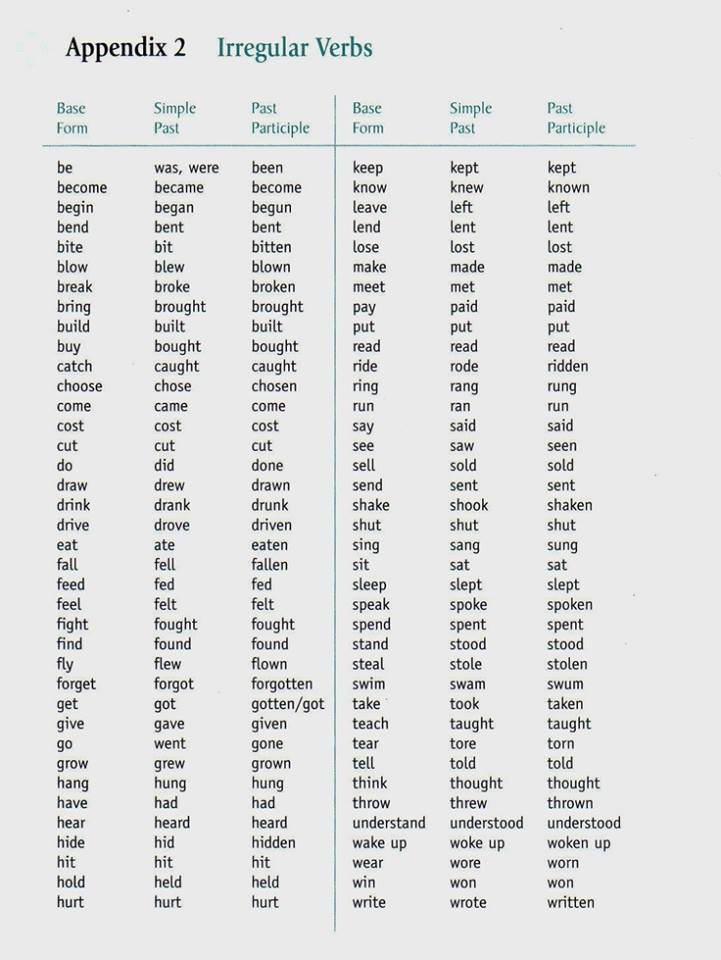
Irregular Verbs


10603603_900020156689520_3797235172782463948_n
10984071_938816236143245_8376732835550428766_n
http://www.mansioningles.com/gram53_ej1.htm (exercises)

Computers: vocabulary

PRESENT PERFECT/ SIMPLE PAST


12311073_1053867024657844_450227833268511750_n1964790_471803192921618_1571274064_n
1978901_476277182474219_129709838_n
 10985860_842596605820747_121948824286522641_n10430846_918248321533370_6106035468079211640_n
 http://learnenglish.britishcouncil.org/en/grammar-reference/present-perfect

Present perfect, since and for