,
Download the test HERE
REMEMBER: when you finish send the activities of the week.

0
comentarios


KEY
page 107
At the Museum
1. 1. Roman Art
2. History Room
3. 10.00 am
4. 8.00 pm
5. 23 Vine Street, London
6. ++44(0) 20 7529 5403
7. £6.00
8. £33.00
3. A: Excuse me, where’s the café?
B: It’s on the first floor, next to the Great Hall.
A: Are there any toilets on this floor?
B: Yes, they’re next to the Red Gallery.
A: What exhibition do you recommend for children?
B: Children Then and Now. It’s in the Children’s Gallery.
4. 1. b 4. f
2. d 5. c
3. a 6. e
page 108
Correct It!
1. studied
2. didn’t go
3. What did Brian do
4. bought
5. Did ... have
Homework for tomorrow : study carefully the vocabulary of Unit 8. TEST
KEY
page 105
7. 1. b
2. c
3. f
4. g
5. i
page 106
1.When: Saturday
Who: Jenny, Melanie and Daniel
Activities: went hiking, built a model aeroplane,
downloaded music, went to the cinema
Opinion of the day: great / special day
Writing Help >> Connectors of Sequence
2. 1. first
2. finally
3. then, next
3. prepared lunch, built model aeroplane, showed Uncle John
how to download music, went to the cinema
4. 1. First
2. Then / Next
3. Next / Then
4. Finally
WORKBOOK: pages 68,69 and 70
READING (page 68)
1. 1. e 2. c 3. f 4. a 5. b 6. d
2. 1. prepared his dinner or did his laundry
2. Sunday
3. visited his father in prison
4. sister
5. a better life
REAL ENGLISH (page 69)
1. 1. build a model 6. bake a cake
2. go hiking 7. water the plants
3. wash the dishes 8. do the laundry
4. write e-mails 9. download music
5. paint 10. prepare dinner
2. 1. I must paint my room.
2. I must prepare dinner.
3. I must do the laundry.
4. I must write e-mails.
5. I must buy some shoes to go hiking.
3.1. went to the sports centre
2. Lucky
3. walked on
4. didn’t paint
5. interesting
4. 1. Nina
2. Pete
3. Miss Jackson
4. Lucky
5. 1. What did you do at the weekend
2. Who did you go with
3. did you go
4. When did you get home
5. Did you have a good time
(page 70)
6. Saturday was a great day! First, I met my friends at the
sports centre. Then, we had lunch at Chez Café. Next, we
went to a museum and saw some amazing dinosaurs. Finally,
we went to a fantastic science fiction film.
7. 1. First
2. Then / Next
3. Next / Then
4. Finally
8. 1. e 2. f 3. d 4. c 5. a 6. b
9. Possible Answer
Yesterday, I went cycling with Ed. First, there were sheep on
the road. Then, I fell. Next, it started to rain. Finally, we got
home at 7 o’clock. It wasn’t a good day.
Activities:
for tomorrow: Student´s book page 107 and Correct it
Workbook activities for the next week: Check your progress pages 70 &71
KEY
page 104
2. Possible Answers
1. Joey prepared dinner on Monday.
2. He didn’t bake a cake on Tuesday.
3. He did the laundry and washed the dishes on
Wednesday.
4. He didn’t water the plants on Wednesday.
5. He didn’t download music on Thursday.
6. He wrote e-mails on Friday.
7. He built a model on Saturday.
8. He went hiking on Sunday.
9. He didn’t paint on Sunday
Listening:
4.prepare dinner, wash the dishes, write e-mails, build a
model, paint
5. 1. 4
2. eggs
3. their grandparents
4. a model car
5. No, she didn’t.
6. paint
6. 1. a party 2. more than half an hour
Activities: page 105: 7 and 8
page 106: 1, 2 ,3 and 4
Key: page 103
1. We don’t add -ed to irregular verbs in the Past Simple
affirmative.
1. Did 2. did 3. didn’t
2
Regular Irregular
learn – learned buy – bought
invite – invited have – had
be – was
know – knew
begin – began
win – won
3. thought
2. sang
3. put
4. taught
5. sent
6. said
7. went
8. did
9. ran
4. 1. gave 6. knew
2. didn’t know 7. began
3. learned 8. finished
4. was 9. died
5. lived 10. wrote
5. 1. is 9. her
2. began 10. has got
3. finished 11. The
4. was 12. don’t go
5. was 13. study
6. bought 14. can
7. quickly 15. writes
8. there were 16. There is
6. 1. Where; the USA
2. start; at the age of four
3. How many; four
4. do; at home
5. speak; four
NOW, when you finished, send me the images of activities to this email:
inglesduques2.0@gmail.com
Activites for Monday:
page 104 : Listen and repeat+ 1, 2 and 3
Listen and repeat: listen HERE
Listening , click HERE, 4, 5 AND 6
Key page 102
Name
|
Prodigy
|
Something special
about the prodigy
|
Jay Luo
|
mathematics
|
graduated from Boise
State University when he was twelve years old.
|
Shirley Temple
|
acting / directing
|
received a
special Academy Award when she was seven years old.
|
Alexandra Nechita
|
visual arts
|
had her own
exhibition when she was
eight years old. |
Jeremy Bentham
|
law / philosophy
|
studied
Latin when he was three
years old.
|
Fu
Mingxia
|
sports
|
was an Olympic
gold medallist at 13 years old.
|
Key
READING (page 68)
1. 1. e 2. c 3. f 4. a 5. b 6. d
2. 1. prepared his dinner or did his laundry
2. Sunday
3. visited his father in prison
4. sister
5. a better life
REAL ENGLISH (page 69)
1. 1. build a model 6. bake a cake
2. go hiking 7. water the plants
3. wash the dishes 8. do the laundry
4. write e-mails 9. download music
5. paint 10. prepare dinner
2. 1. I must paint my room.
2. I must prepare dinner.
3. I must do the laundry.
4. I must write e-mails.
5. I must buy some shoes to go hiking.
4. 1. Nina
2. Pete
3. Miss Jackson
4. Lucky
5. 1. What did you do at the weekend
2. Who did you go with
3. did you go
4. When did you get home
5. Did you have a good time
(page 70)
6. Saturday was a great day! First, I met my friends at the
sports centre. Then, we had lunch at Chez Café. Next, we
went to a museum and saw some amazing dinosaurs. Finally,
we went to a fantastic science fiction film.
7. 1. First
2. Then / Next
3. Next / Then
4. Finally
8. 1. e 2. f 3. d 4. c 5. a 6. b
9. Possible Answer
Yesterday, I went cycling with Ed. First, there were sheep on
the road. Then, I fell. Next, it started to rain. Finally, we got
home at 7 o’clock. It wasn’t a good day.
ACTIVITIES:
check your progress pages 71 and 72.
Key
page 100
Past Simple – Regular Verbs
3. 1. The Vikings invaded England. – b
2. World War II started. – e
3. Columbus and his sailors arrived in America. – c
4. Alexander Fleming discovered penicillin. – d
5. An astronaut walked on the moon. – a
5. 1. travelled 4. hated
2. collected 5. smelled
3. carried 6. smokedt
7. 1. Edmund Hillary climbed Mount Everest in 1953.
2. John Lennon played in the Beatles in the 1960s.
3. Mozart lived in Vienna in the 18th century.
4. The Chinese invented paper in 105.
5. William Roentgen discovered X-rays in 1895.
101.- 8,9,10,12 and 13
page 101
8. Possible Answers
1. Students didn’t use notebooks in Victorian England.
2. Students didn’t watch TV in Victorian England.
3. Students didn’t talk on mobile phones in Victorian
England.
4. Students didn’t play computer games in Victorian
England.
5. Students didn’t study robotics in Victorian England.
6. Students didn’t listen to MP3 players / iPods in
Victorian England.
9. 1. Did Victorian children study sport? Yes, they did.
2. Did John Lennon live in the USA? Yes, he did.
3. Did World War I start in the 19th century? No, it
didn’t.
4. Did gong farmers work at night? Yes, they did.
5. Did the Chinese invent the first car? No, they didn’t.
10. Accept all logical and grammatically correct answers.
12. 1. did … live 7. cleaned
2. Did … enjoy 8. worked
3. didn’t stay 9. pushed
4. lived 10. opened
5. didn’t study 11. tried
6. worked 12. changed
13. 1. Did all poor children live with their parents?
No, they didn’t.
2. Did they study in schools?
No, they didn’t.
3. What did some children clean?
They cleaned the streets.
4. What did children push in coal mines?
They pushed carts of coal.
5. Did the government try to help them?
Yes, it did.
6. Why did young children stop working in coal mines?
Because the government changed the laws.
Activities:
page 102 : 1, 2 and 3 + Listening : 5, 6 and 7
Listening: click HERE to listen
Name
|
Prodigy
|
Something special
about the prodigy
|
Jay Luo
|
mathematics
|
graduated from
………………………………………
when he was………… years
old.
|
…………………………
|
acting / directing
|
received a special Academy Award
when she was
…………………… years old.
|
Alexandra Nechita
|
……………………
|
had her own exhibition when she was
…………………… years old.
|
Jeremy Bentham
|
law / philosophy
|
…… when he was three
years old.
|
…………………………
|
……………………
|
was an Olympic
gold medallis
at 13 years old. |
Haz los ejercícios de la página 98: 1, 2,3,4 5,6 y 7
1. Listen and repeat. click HERE to listen
exercises listening 5 , 6 & 7, click HERE to listen
Buenos días a los alumnos de 1º ESO, me está dando problemas colgaros esta explicación del TEMA 8, por si acaso, vuelvo a ponerla, esta vez un poco más corta. Sin el repaso de los verbos en pasado. Si veís 2 entradas no os preocupeís, la que vale es esta.
UNIT 8 : THEN AND NOW
GRAMMAR:
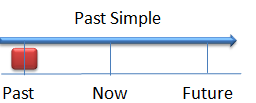
PAST SIMPLE:
Copy this chart into notebook:


| Conjugación | Significado |
|---|---|
| I worked | yo trabajé |
| you worked | tú trabajaste |
| he worked | él trabajó |
| we worked | nosotros trabajamos |
| you worked | vosotros trabajasteis |
| they worked | ellos trabajaron |
| Verbo | Pasado | Significado |
|---|---|---|
| to go | went | ir |
| to buy | bought | comprar |
| to have | had | tener |
| to be | was/were | ser o estar |
| Verbo | Pasado |
|---|---|
| use | used |
| die | died |
| Conjugación | Significado |
|---|---|
| did I sing? | ¿canté? |
| did you sing? | ¿cantaste? |
| did he sing? | ¿cantó? |
| did we sing? | ¿cantamos? |
| did you sing? | ¿cantasteis? |
| did they sing? | ¿cantaron? |
| Complemento | Significado |
|---|---|
| yesterday | ayer |
| two years ago | hace dos años |
| in 2008 | en 2008 |
| last year | hace un año |
| on 01/01/2000 | el 01/01/2000 |
| in July | en julio |

Designed by EZwpthemes
Converted into Blogger Templates by Theme Craft